Component repair
Hardware, weatherstripping, a sash, or glass may be the right scope when compatible parts are available and the remaining unit is sound.
REPAIR OR REPLACE
A draft, leak, or sticking sash is a starting point for an assessment—not an automatic order for new windows.
| Clue | What to discuss | Decision to clarify |
|---|---|---|
| A draft near the edge | Weatherstripping, fit, and the installation joint | Could targeted sealing or adjustment help? |
| Fog between panes | The insulated glass assembly and its condition | Can the glass assembly be replaced separately? |
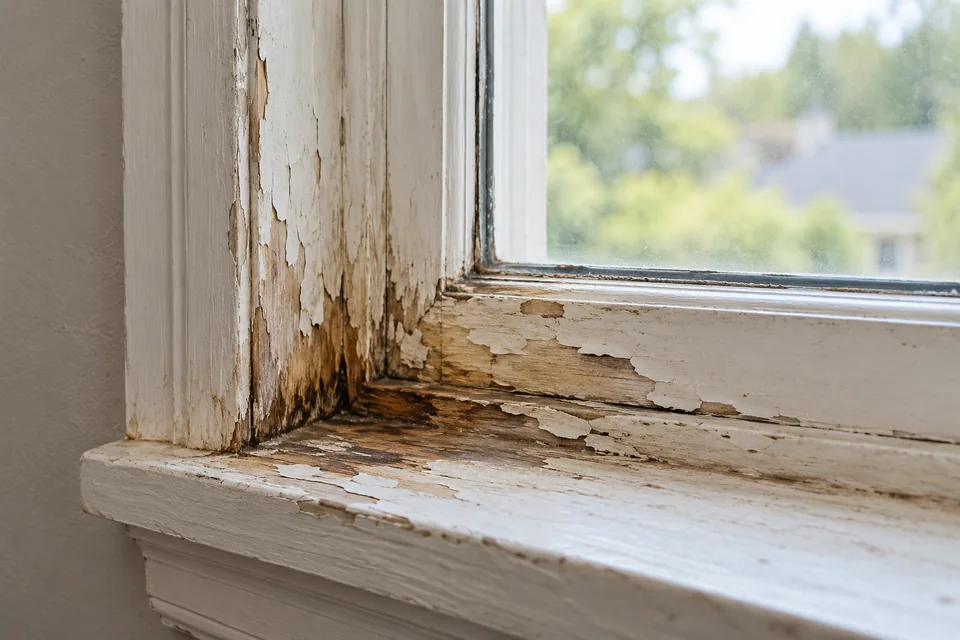
| Water staining or soft wood | Moisture entry and the surrounding wall | What is the source and extent of damage? |
| Sticking or poor locking | Hardware, alignment, movement, and frame condition | Is the cause a component or the whole opening? |
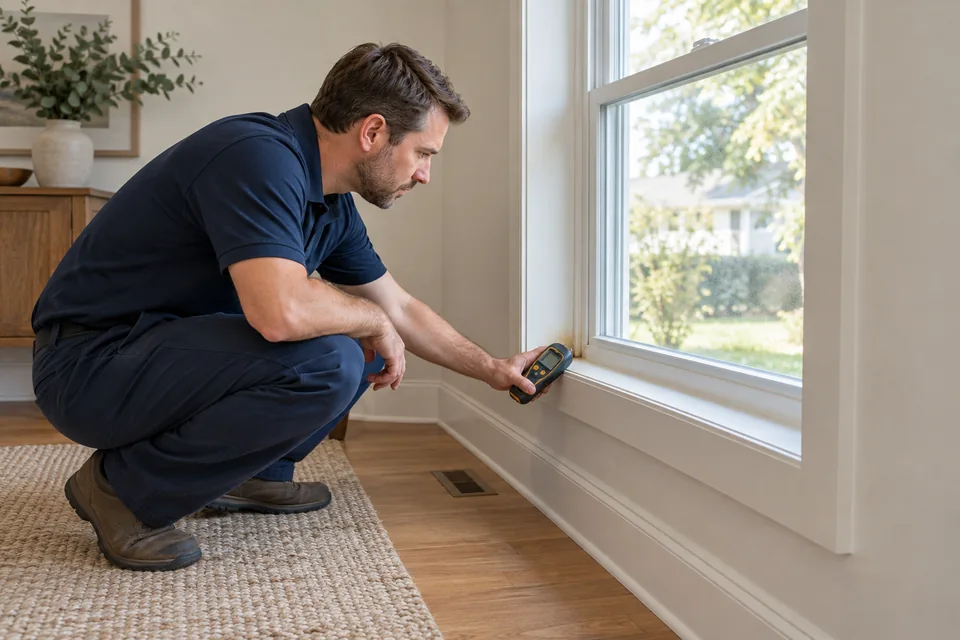
Water near a window does not identify where it entered. Ask for an explanation of the likely source, what was inspected, and what remains uncertain. Painting over a mark or replacing a unit without resolving moisture entry can leave the underlying problem.
Photographs help document a concern, but they cannot establish concealed frame or wall condition. A site assessment should come before a fixed diagnosis.
Hardware, weatherstripping, a sash, or glass may be the right scope when compatible parts are available and the remaining unit is sound.
A new unit fits within a retained frame. Ask about frame condition, reduced glass area, and how the existing installation will be evaluated.
Understand installation scopeThe old frame is removed. This exposes more of the opening and can involve trim, flashing, wall repairs, and finishing.
Compare installation methodsA useful recommendation connects the observed condition to the proposed work. Request photographs or observations, repair alternatives, exclusions, and a written allowance or approval process for concealed damage. Compare equivalent scope rather than the shortest quote.
For comfort concerns, the Department of Energy also recommends checking air leaks and weatherstripping. Replacement is one option within a broader home assessment.
Department of Energy: home energy checklist ↗